Taqwa tells you the prayer times where you are, calls you to them, points you to Makkah, and carries the Quran.
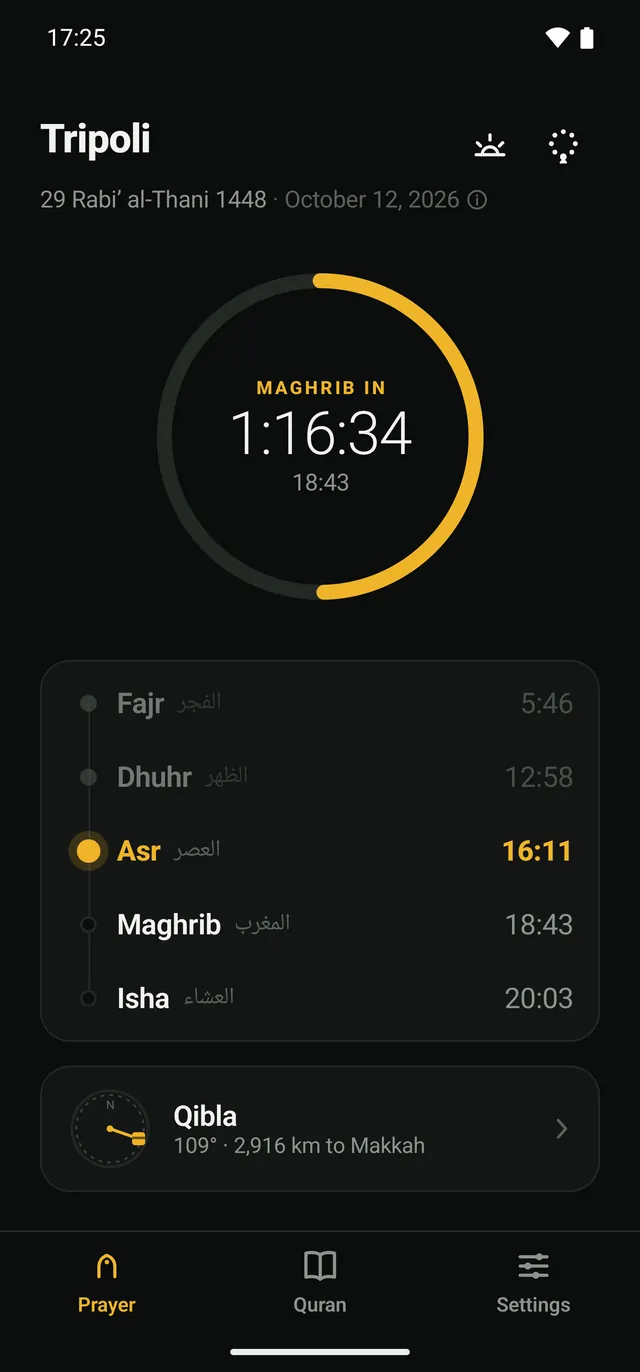
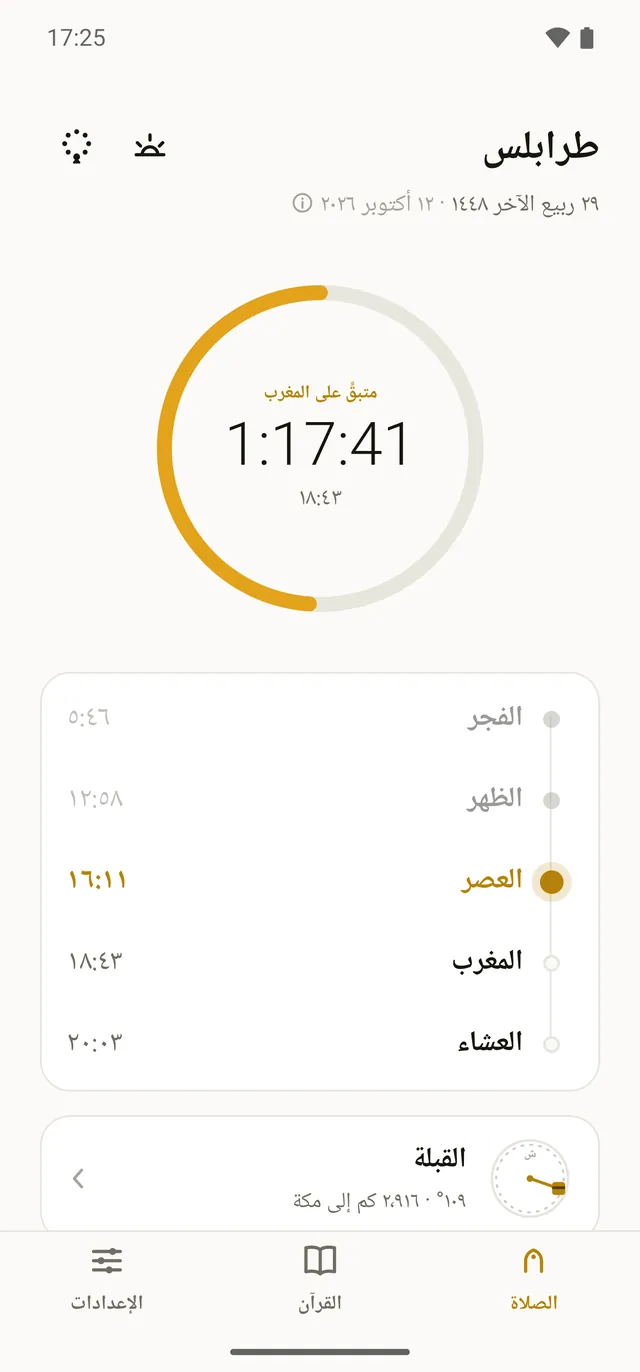
Prayer times
For anywhere on Earth, from your location or a bundled list of cities. Taqwa uses the timetable the mosques near you follow: where it holds that timetable, it reproduces it and checks it day by day; where mosques differ, it shows each prayer once all have begun it. Tap (i) to see whose times they are. Match my mosque, the classic methods, Hanafi or Standard Asr, high-latitude rules, a 24- or 12-hour clock, and the Hijri date beside the Gregorian.
Adhan
A notification for each prayer, with a clear tone, a takbir, or the opening of the adhan in a choice of voices. An optional reminder a few minutes before, and an optional notification for Tahajjud.
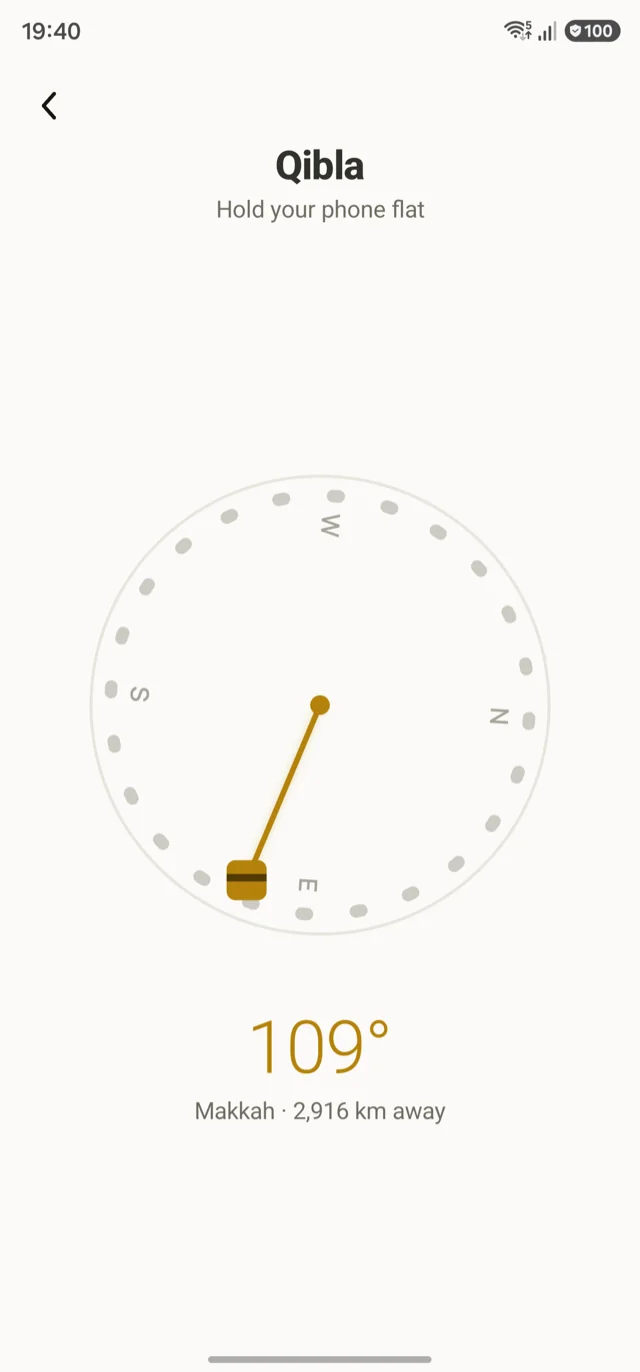
Qibla
A compass corrected to true north, the distance to Makkah, and honest guidance when the phone's compass needs calibrating instead of a needle that pretends.
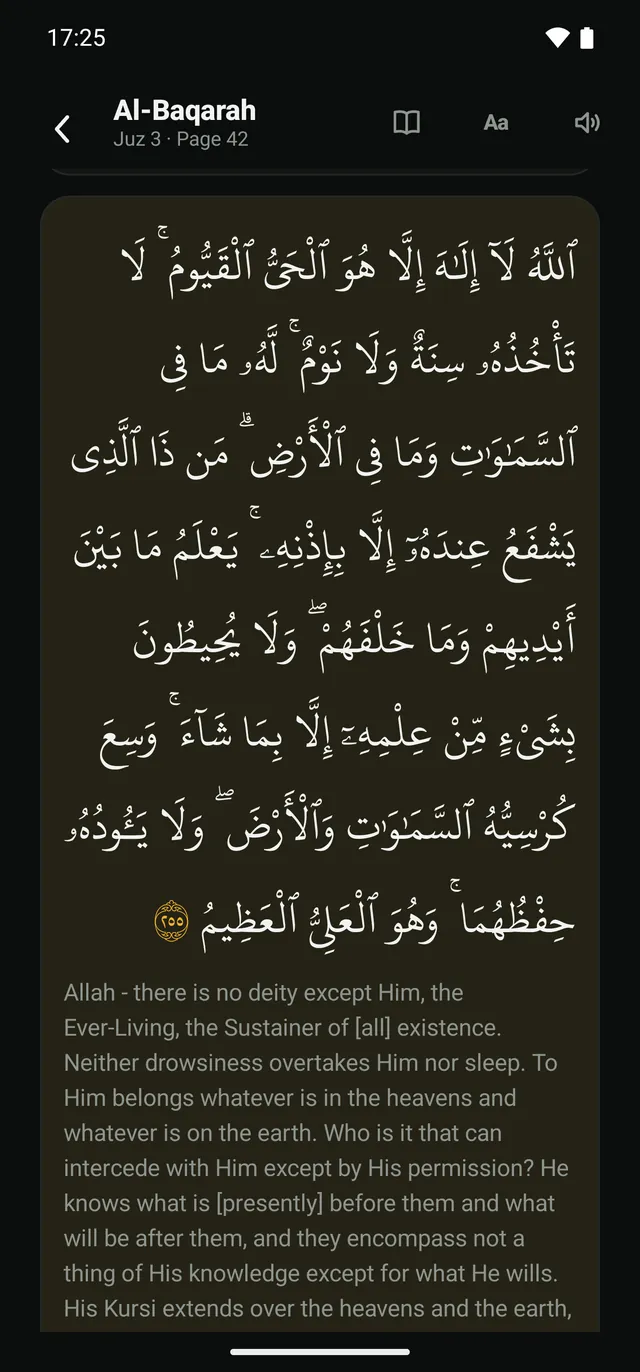
The Quran
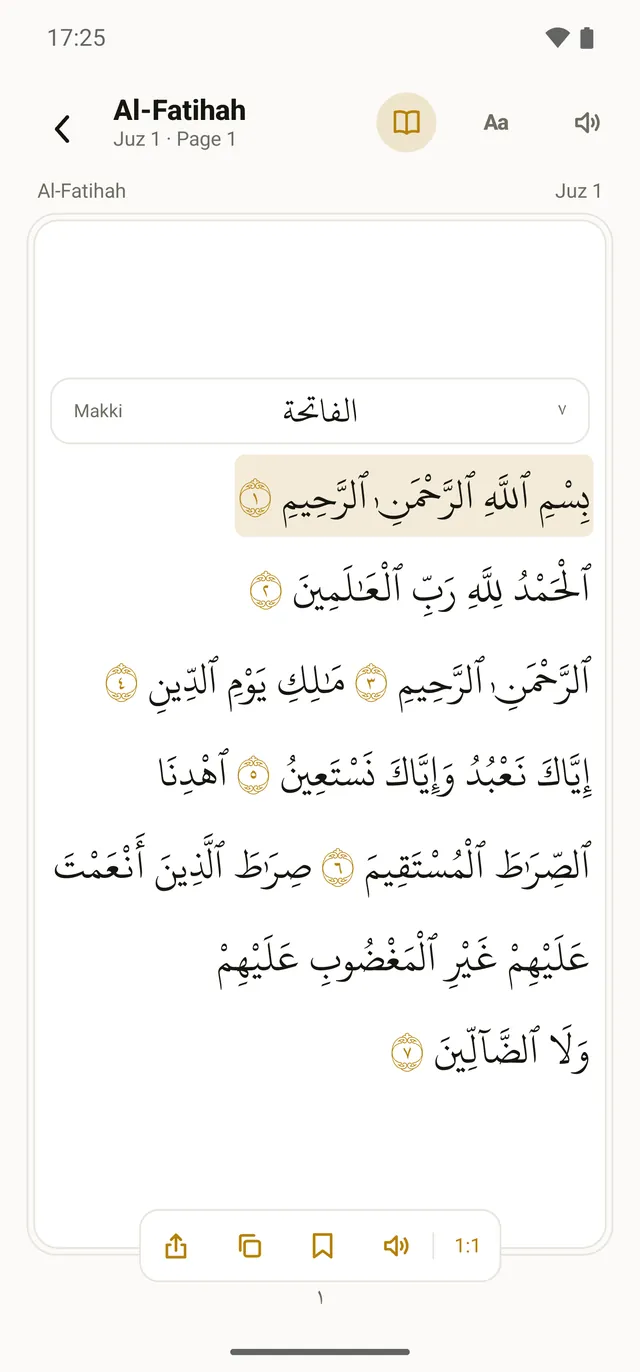
The Uthmani text in the Madinah Mushaf typeface, seven translations and a transliteration, a page-accurate Mushaf mode, search, bookmarks, and copy or share of any ayah. All of it offline.
Recitation
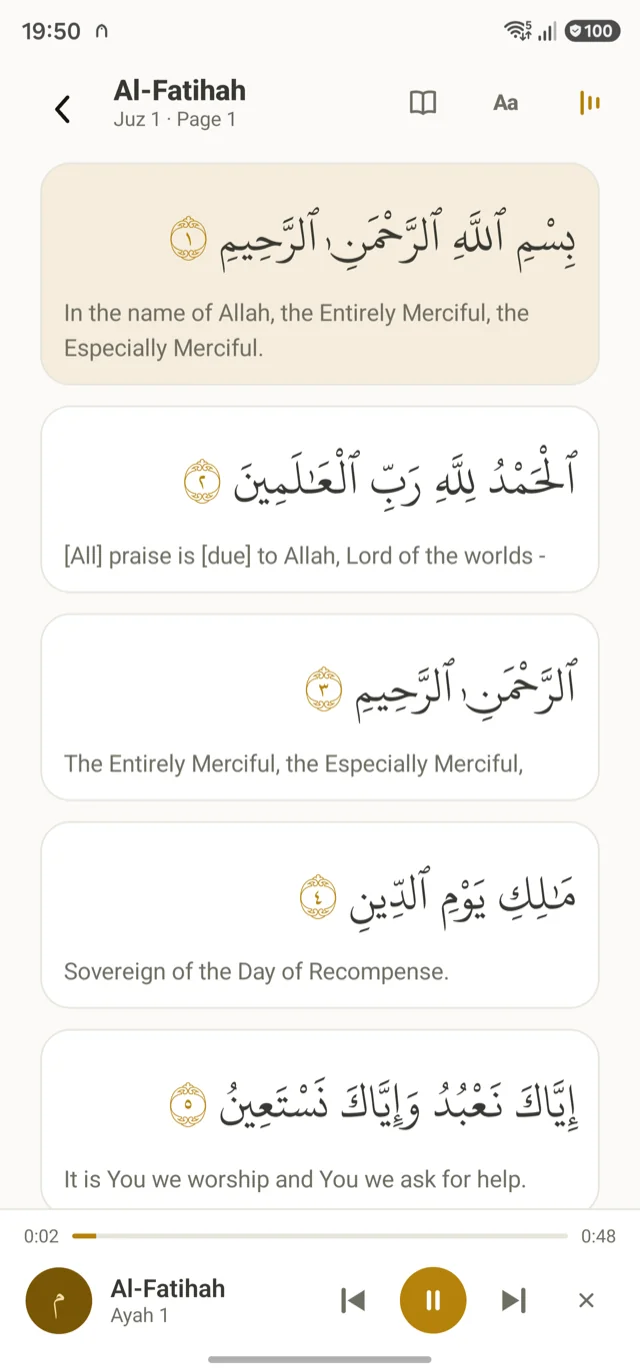
Ten reciters. Download a surah, or the whole Quran for a reciter, and listen offline with the ayah lit and the page following the voice, in the background with lock-screen controls.
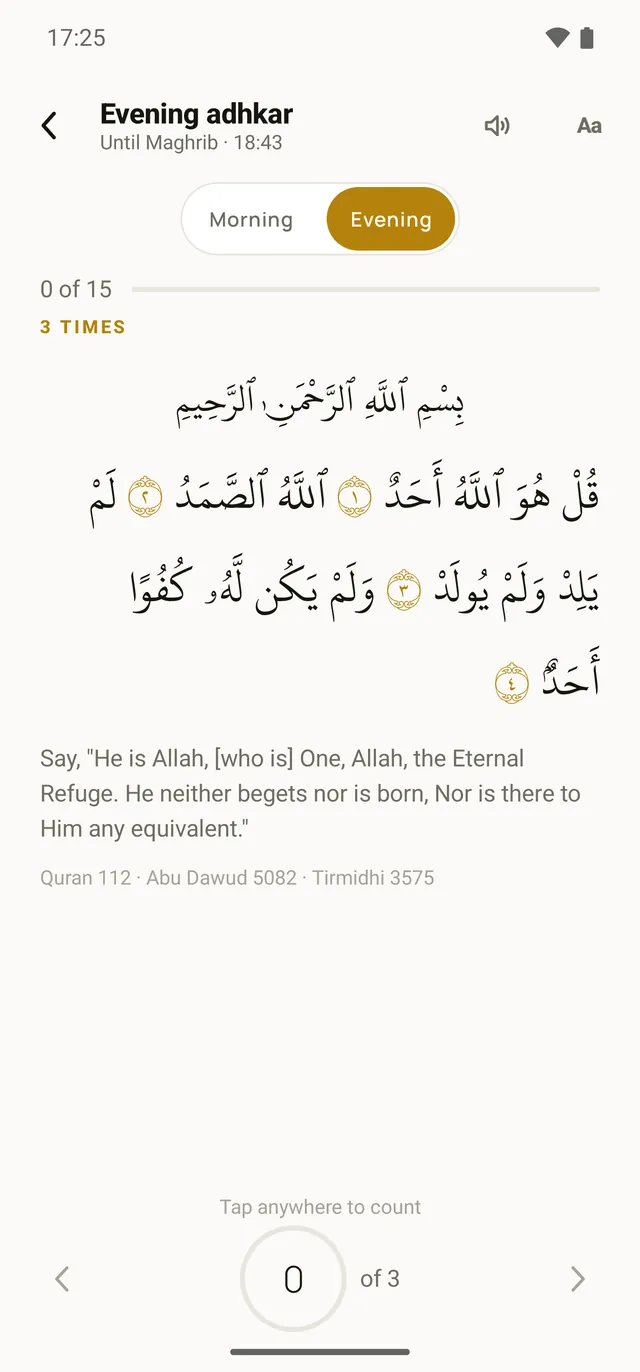
Adhkar and tasbeeh
The morning and evening adhkar in Arabic, with a translation in your language, each counted on screen with a tap; the Quranic ones recited by your chosen reciter, and a reminder for each set if you want one. Beside them, a dhikr counter: tap anywhere on the screen, the post-prayer set runs to a hundred with the phrase changing at each part and a distinct pulse in the hand. Nothing is ever totted up.
Widgets
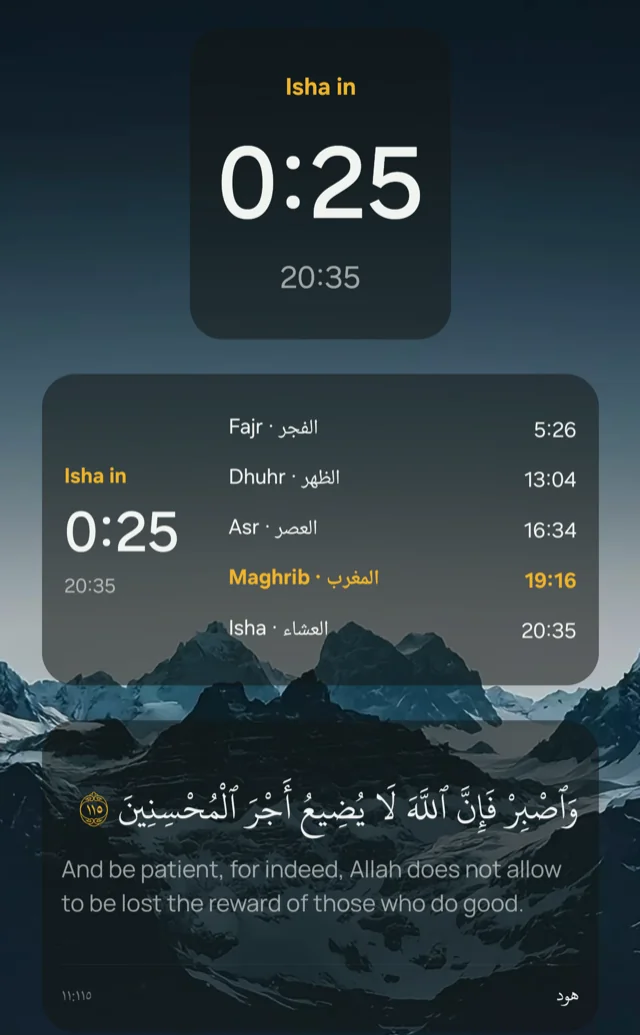
The next prayer and a live countdown on the home screen, the day's times, and an ayah a day, on both platforms. They keep counting without the app being opened.
Seven languages
Arabic, English, French, Turkish, Indonesian, Urdu and Bengali, following the phone. Arabic and Urdu are laid out right to left, and every language keeps its own digits. Light and dark, following the phone or fixed, in one amber accent.
On your home screen
The next prayer, without opening anything.
Three widgets, on Android and iOS. A small one with the next prayer and a live countdown, a medium one that adds the day's five times, and the ayah of the day in the reader's own typeface with its translation. They update on their own, all day, and their background can follow the system, stay light or dark, or blend into your wallpaper. Tap a prayer widget for the Prayer screen; tap the ayah to open it in the reader.
On the phone
Mushaf mode
Recitation
Qibla
Adhkar
The reader, dark
Arabic
Privacy
Offline by design. Online only when you ask.
There is no server behind Taqwa and no account to create. The one thing it uses the internet for is recitation: fetching a surah when you download it or play one not yet downloaded, and, once you have used recitation, checking once a day for an updated list of reciters. Until then, it makes no network request at all.
Stays on your phoneLocation, settings, bookmarks and counts never leave it.
Online only when you askThe internet is used for one thing: recitations you choose to download, from Taqwa’s public repository on GitHub.
No account, no ads, no analyticsNothing to sign into, nothing to sell.
Checked independentlyExodus Privacy’s report lists every tracker and permission in the Android app.
Free software
Free, for everyone, for good.
Taqwa is released under the GNU GPL v3. The code is public, every text, font, recording and data source is credited in the app, and anything built from it must stay free.